Welcome

Welcome from the Principal

Mr Darren Hutton - Principal

A very warm welcome to Calderwood Christian School. We are delighted that you have chosen to partner with us, as together, we provide a quality Christian education for your child. God's Word says that 'whatever you do, work at it with all your heart, as working for the Lord, not for human masters.' (Col 3:23)

At Calderwood, we value academic mastery and the pursuit of excellence in all we do, but we believe that education is about so much more than academic achievement and worldly measures of success. A rounded education acknowledges the inherent creativity, incalculable value, and eternal potential of each student. Calderwood Christian School aspires to see each child reach their potential and transform the world into which they graduate.

"We are God's handiwork, created in Christ Jesus to do good works, which God prepared in advance for us to do..." (Eph 2:10)

We believe that the formation of a young person must be undertaken within the context of our service to Jesus Christ, based on the Word of God and lived out in community. It is for this reason that CCS partners with parents to provide an authentic Christian community within which to grow and learn. Students grow in character, develop godly virtues, and refine their gifts and passions, through age-appropriate learning activities and being encouraged by faithful Christian men and women.

My prayer is that our partnership will result in the raising up of young men and women of godly character and of influence.


Our Vision and Mission

Our Vision

A people of genuine faith, equipping curious and discerning learners to serve Christ.


Our Mission

In Christ's service, to partner with parents in providing a quality Christian education founded on the Word of God.

Communication

Our commitment to you

Calderwood Christian School is committed to ensuring a respectful learning environment that is safe, positive and supportive for all students, staff and visitors of the school.

Educating children is a process that involves a partnership between parents, teachers and the school community.

  • Communication happens best when it is face-to-face
  • Meetings should be approached in the spirit of cooperation and general partnership
  • Interviews are productive when approached in a calm, positive and relaxed manner and with a sense of trust
  • Treat each other with respect
  • Actively listen to each other's point of view
  • Parents and teachers should work together on a plan to move forward and arrange any necessary follow up
  • Planning a future meeting can be valuable

Communicating with you

Teachers will communicate with parents via email. Parents are also encouraged to communicate with their child's class teacher via email.

Click through for more ways we communicate school information.

SEQTA Engage

The school uses SEQTA as its learning management system. SEQTA Engage is the parent portal which allows access to various resources such as reports. When your first child commences at Calderwood you will be sent an email with details of how to set up your SEQTA account. If you need login details at any time in the future you should contact Reception.

Further technical assistance for SEQTA Engage can be found here.

School reports

Two academic reports are produced each year:

  1. Semester 1 Academic Report - end of Term 2 (start of Term 2 for Year 11 and 12 students)
  2. Semester 2 Yearly Academic Report - end of Term 4 (start of Term 4 for Year 11; end of Term 3 for Year 12 students)

Reports are available via SEQTA Engage.

Parent-teacher interviews

The school organises formal Parent-Teacher interviews biannually. Appointments are made through an online booking system. You will be notified by email when bookings open and given instructions on how to book. Parent-Teacher interview dates are on the website calendar. Parents or teachers may request an interview when required throughout the year.

School newsletters

The Calderwood News is produced digitally twice a term and emailed to families.

The Junior School News and Notices are communicated to Junior School parents in Weeks 1 and 5 of each term, and include information regarding student homework requirements. They are also emailed to families.

Social media

The school has a presence on Facebook, Instagram and LinkedIn. We encourage our families to keep up with us on these platforms too.

Website

Our website is a wealth of information regarding the school. Here you can access school policies, Association information, our events calendar, uniform requirements and other helpful information about school life.

Communicating with us

We invite you to communicate with your child's teachers via email, and they will communicate with you in the same way.

Keeping your details current

The school operates a digital database consisting of data relevant to families in our community. For each family, we store data on parents’ names and occupations; children’s names and ages; family home address, telephone numbers, including work and mobile phone numbers and email addresses; emergency contact details; Medicare and immunisation status.

Information generated from the database is used by the administrative and teaching staff:

  • to contact you in emergencies if necessary
  • to make sure that all families are sent information from the school as needed, and
  • to assist in determining what resources are needed in the school.

The school respects the privacy of individuals and families and places a high priority on integrity in its handling of information provided to the school. It seeks to protect the rights of all people who provide information to the school, in accordance with relevant legislation. The school’s Privacy Policy is available here.

Please notify the school via Consent2Go as soon as any of your database information changes, especially in the case of change of home address, email address, daytime contact number or emergency contact numbers.

Contact information for school

Reception details

Phone: 4230 3700

Email: admin@calderwood.nsw.edu.au

Hours: 8.30am-4pm, Monday to Friday.

General school life

Assemblies

Secondary School assemblies

Secondary School assemblies are held weekly during pastoral care time once a week on Mondays in the School hall.

Throughout the year we hold these assemblies to recognise and celebrate special events and significant occasions, such as Easter and Year 12 Graduation. Parents are welcome to attend the assemblies. Notification of special assemblies will be through the school calendar, SEQTA and various social media platforms.

School houses

Every student is placed in a House.

Each House has one Junior School captain and two Secondary School captains. House activities will include opportunities to develop school spirit and healthy competition. Students can be awarded individual and group points for their houses through a variety of activities and demonstrations.

Sharks Blue.png
Eagles Yellow.png
Dragons Green.png

Excursions

During the year, the school arranges excursions for classes and student groups. These are usually organised in conjunction with units or topics being studied in class. Students are expected to participate in all excursions organised for their class group.

The cost of excursions is covered by the annual school fees. The only exception to this may be activities that are optional, such as Combined Independent Schools (CIS) sporting activities, gifted/talented camps, and (in the Secondary School) service trips and the Duke of Edinburgh Award Scheme.

Notification and permission slips are sent electronically via Consent2Go, our digital platform that manages incursions, excursions, overnight camps and sporting events. It is a secure platform for recording and managing parent contact details, student medical information and school activities.

At times, the assistance of parents is requested and appreciated on excursions. Please check your child's digital permission note for requests of assistance and invitations for participation.

Homework

Over a period of a week homework should include reading (daily), spelling, mathematics, research/projects, revision/study notes.

Following is a guide to the daily amount of homework, study and assignments expected of students:

GradeHomework
Year 7approx. 1 hour per night, 4 times per week
Year 8approx. 1.5 hours per night, 4 times per week
Year 9 approx 2 hours per night, 4 times per week
Year 10approx 2.5 hours per night, 4 times per week
Year 11approx 18-20 hours per week
Year 12building to approx. 24-28 hours per week
Holiday homework

It is important that school holidays be available for students to rest from the busy schedule of the school term, to spend greater time with family and to enjoy non-school activities that will encourage them to reflect upon God’s goodness and grace. Holiday homework will therefore not be set for students from Years 7-9.

As a part of the preparation of students for external examinations it is generally considered appropriate that school holiday homework be set for students in Years 10, 11 and 12.

Lockers

Students in Years 7-12 are provided with a locker. All lockers are the property of Calderwood Christian School. The school assumes NO responsibility for loss or damage of items kept in the locker.

Access to lockers is before school, after school and during morning and afternoon break. No students should be going to lockers between classes, or during class.

The Head of Secondary School or delegate(s) has permission to cancel locker usage, and to search lockers if deemed necessary.

A student using a locker is presumed to have no expectation of privacy.

Each year group has an allocation of lockers. Students will be assigned a locker within their year group area.

Student responsibilities

  • Students will maintain lockers in good order. They are to report any damage to the pastoral care teacher.
  • Students are to use lockers to exclusively store school-related materials or personal items.
  • Students are solely responsible for their lockers and must not share their locker or code with peers.
  • Food is not to be left in lockers overnight.
  • Repeated lateness to class due to locker use will see the locker use cancelled.
  • All lockers must be cleaned out and in good order by the end of each term.

Keys and locks

Students will be assigned a lock that must be returned at the end of the Agreement. Loss of the lock will incur a $20 charge for replacement. It is the student's responsibility to ensure they lock their locker after every use.

Inspection of lockers

Principals must ensure the safety of all students and staff on the school site. As such, lockers can be searched by a relevant member of staff if they have reasonable grounds to suspect a student is in possession of:

  • illegal drugs
  • stolen property
  • illegal or inappropriate material
  • electronic devices which may contain images or material that is illegal or offensive or inappropriate in nature.

Seizure of property

The Principal, Head of Secondary School or delegate(s) may seize any illegal or unauthorised items in lockers or any other belonging that may pose a potential threat to staff or students. Police will be informed of any illegal or dangerous items found in lockers.

Lost property

It is inevitable that valuables brought to the school by students may become lost. It is very time consuming for staff to resolve problems relating to lost property. Any valuables, money or precious toys brought to school will remain the responsibility of the student. Whilst care will be taken, the school cannot accept responsibility for lost valuables. Therefore, parents should ensure that all personal property such as uniforms, bags, hats and wet weather gear are correctly labelled with your child’s name. Unlabelled uniform items will be placed in the lost property tub located outside of Student Services. Parents and students are encouraged to check the tub if they are missing a uniform item.

Any unclaimed uniform items are sorted at the end of each term and either placed in the Secondhand Uniform Shop, or donated to local charities.

Mobile phones and smart watches

Calderwood Christian School aspires to strong Christian values that are expressed through policies and guidelines, programs and cultural expectations. These values have the potential of being compromised through the unfiltered and unsupervised use of mobile phones and smart wearable technology.

The CCS Mobile Phone and Smart Wearable Policy identifies the importance of schooling and significant impact digital devices can have on young people and their learning.

In Secondary School, we acknowledge the importance of students having mobile phones before and after school for the purposes of contact with parents, with employers, or for safety. Students will continue to be allowed to bring their phones to school and use them before and after school if necessary. Students must not have their mobile phone on their person (in their pockets) or in with their equipment between the hours of 8.10am and 4pm. Any mobile phones brought to school must be turned off and remain in the student's locker for the duration of the day.

Should a student require the use of a phone during the school day, they are expected to request the use of a phone at Student Services.

Should they need to make a call between the end of the school day and 4pm, students will be expected to seek permission from a teacher before doing so and will respectfully follow teacher instructions regarding when and where they make the call.

Sport in curriculum

Year 7-12 students are engaged in weekly sports sessions. During this time, they have the opportunity to play a wide range of sports. This time is about the development of the whole child. Students freely interact with their peers and our school core values of Honour, Service, Perseverance and Faithfulness are enhanced in this environment.

Differentiated learning

Children with learning needs

To assist students with learning difficulties, a variety of strategies are implemented.

Initially, class teachers provide adjustments and as much personal assistance as they are able. To further assist students with difficulties, Learning Enrichment Assistants and Learning Enrichment Teachers provide both ‘in class’ and ‘small group’ remedial assistance.

Communication between parents and school staff is critical if the needs of these children are to be met. If teachers identify a child who is experiencing difficulty in their academic learning, parents are invited to an interview. These discussions seek to develop effective home and school-based strategies, which may be used to assist the child.

Individual Learning Plans (IPs)

If your child requires an Individual Learning Plan in order to provide the necessary support for them to access the curriculum at a level that is appropriate for them, parents, teachers, specialists and your child collaborate to develop a plan that will most appropriately address your child’s needs. An IP may be prepared for students who are struggling to access the curriculum at grade level, whilst for others it might be that they require extension and additional challenge.

Children with recognised strengths and abilities

We seek to provide opportunities for enrichment and extension for students recognised as having strengths in areas of their learning. These may include participation in activities such as State and national subject-specific competitions, chess club, Tournament of Minds, da Vinci Decathlon, speech nights and master classes.

Where appropriate, individual student needs are assessed and acceleration may be offered in recognised areas of strength.

Wellbeing

School counselling service

We are able to offer both counselling and educational assessment support to all students from Prep through to Year 12.

Students in Prep and Junior School require parental permission to access counselling and assessment services. Parents are required to contact their child's class teacher should they wish to make a referral on behalf of their child.

Students in Secondary School can refer themselves to the counsellor.

Staff are also able to refer students for school counselling services, however, they must seek permission from a parent to do so.

Our school counselling service is voluntary, therefore no student can be mandated to see the school counsellor or psychologist. Likewise, a student can withdraw consent for services at any time during treatment.

Should you wish to find out more about the school counselling service, please make direct contact with your child's teacher or relevant Coordinator (K-2 or 3-6)

Bullying awareness and prevention

Preventing and responding to bullying behaviour in learning and working environments is a shared responsibility of all staff, students, parents, caregivers, and members of the wider school community.

The School's duty of care provides for the School to take the necessary steps to protect students from physical, psychological or emotional harm arising from issues such as bullying, and to take the necessary steps to avoid forseeable risks of such behaviour.

Concerns or allegations about bullying behaviour must be brought to the attention of the class teacher, Coordinator or Head of Junior School as soon as possible. Reports of bullying may be made in writing, by phone or in person. The privacy of any individual reporting matters of bullying will be maintained by the School. Investigations into allegations of bullying will be conducted by the School. Parents are asked not to intervene in the process, or contact parents whose children are alleged to be involved. Staff will make every effort to resolve situations as quickly as possible.

The following definitions for bullying and harrassment can be found in our Anti-Bullying Policy.

Bullying: an ongoing misuse of power in relationships through repeated verbal, physical and/or psychological harm. It can involve an individual or a group misusing their power over one or more persons. Bullying can happen in person or online, and it can be obvious (overt) or hidden (covert). Bullying of any form or for any reason can have long-term effects on those involved, including bystanders. Single incidents and conflict or fights between equals, whether in person or online, are not defined as bullying.

Cyber-bullying: causing hurt via information and communication technologies, such as the Internet, social media, and through the use of mobile phones and other devices.

Harassment: ongoing verbal or physical attacks on another person.

Cyber-bullying most often occurs outside school. Concerns regarding the inappropriate use of digital technologies and social media platforms will be investigated where the behaviour threatens the wellbeing of another CCS student or has the potential to compromise relationships within our community. In some instances, it is not within the School's jurisdiction or means to investigate. In these circumstances the School will encourage parents to make direct contact with the police.

If your child experiences bullying on a bus to or from school, we encourage you to report it to the Head of Junior School and to the bus company. The context within which these matters might arise vary markedly. In some cases, the School will investigate. In other instances, the School will request parents to make direct contact with the bus company or the police, or both.

Bullying No Way

Bullying prevention starts in early childhood through the helpful guidance of parents and teachers. In partnership with you, we can assist students to develop a wide range of skills to prevent bullying and build a culture of kindness. Our students understand the ultimate act of kindness is found through the death and resurrection of Jesus.

Be kind and compassionate to one another, forgiving each other, just as in Christ, God forgave you. (Eph 4:32)

Each year Calderwood students participate in the National Day of Action against Bullying and Violence (NDA), Australia’s key initiative against bullying and violence.

Health and physical wellbeing

Students learn best when they have had a good night's sleep and a good breakfast. To support your child's learning, we also ask that you provide a nutritious lunch, adequate water and snacks, and the correct uniform items to keep cool/warm. Keeping your child home if they are unwell respects the wellbeing of other members of the community and ensures a shared responsibility for minimising the spread of any communicable diseases, infections, or infestations (eg. head lice).

Allergy awareness

Parents and caregivers are requested not to send food to school that contains nuts (especially peanuts). This includes peanut butter, Nutella, all nuts and food containing peanut oil, as well as foods containing nuts. This is especially important in the Junior School, where young children are less able to manage their allergy. Whilst we cannot claim to be a nut-free environment, we do wish to minimise the threat to our more vulnerable community members.

Asthma, anaphylaxis and diabetes

A management plan for these conditions must be provided to Student Services before the student commences at school and updated each year. These forms can be obtained from Student Services if required.

First aid procedures

Our teaching and administrative staff possess current first aid qualifications. In the event that a student becomes ill or is injured, the following procedure is adopted:

  • minor injuries and illnesses are treated at school
  • in more serious cases, the school will attempt to contact the parents or the emergency contact person, who may then arrange to take the child to their own doctor
  • in emergencies, the school will contact the parents and an ambulance will be called.

Infectious diseases

It is very important that parents advise the school if their children are diagnosed with any of these illnesses. Visit the Department of Health's website for the most current information about treatment, regulations in relation to schools, and isolation procedures.

Medications

If your child has a medical condition that requires medication, or has a Health Plan for the management of a condition, please contact the office for a copy of the Medication Policy: Administration of Medication. Medications are to be handed in to Student Services for safe administration.

Medications on excursions

If students require medication during an excursion, it must be provided to the attending teacher immediately before the excursion (ie. before boarding the bus) in a labelled ziplock bag with the completed excursion 'Medication Authority Form' . The medication will not be packed by the school. This does not apply to asthma puffers and EpiPens.

Secondary students with asthma must carry their own asthma puffer to excursions. It is the responsibility of the parent and student to ensure they have it on their person at all times. If your child has an EpiPen, it will be packed by the school.

Sun safety

Students are encouraged to apply adequate (minimum) 30+ broad spectrum sunscreen prior to school. During the school day, students will be issues with adequate (minimum) 30+ broad spectrum sunscreen and (in some cases) assisted to apply it. Students may bring additional sunscreen to apply at recess, lunch and sport. Sunscreen is available on request from Student Services. Teachers will make sunscreen available at sporting events.

Hats are a compulsory uniform item all year round. When practicable, the use of shaded or covered areas when outdoors will be encouraged.

Further reading: Sun Safe Policy.

Commendations and Discipline

Awards

The commendation and discipline system is part of the school's training of students for life, or discipling. It aims to provide the student with achievable standards of behaviour and encouragement to do their very best in all spheres of school life. The school's reward system gives commendation to students who set fine examples to others in the school community and/or show excellence in any field of school endeavour. Parents are notified of awards via email.

There are two categories of Commendation Award:

  • Academic
  • Character

These awards are for observed behaviours through a specific event or trend over time as observed in a specific sphere (such as in a particular class). Character awards recognise attributes such as: God first, serving others and respect. Academic awards celebrate attributes such as: responsibility, diligence and teamwork.

Discipline policy

Student engagement and safety are maximised at Calderwood through the consistent application of discipline based on biblical principles. In order to achieve consistency, it is imperative that each member of the school community has a shared understanding of the types of behaviour that enhance or detract from the wonderful Calderwood learning environment.

The welfare of all children at Calderwood is foundational to their training in Christian character and behaviour. (See Welfare Policy.) It therefore includes nurturing, building, encouraging and supporting; but also training, direction and correction.

The Calderwood Christian School Discipline Policy describes the philosophy and sequential processes followed by the school to correct or redirect students to patterns of behaviour that respect the mission, vision and values of the school.

The purpose of Calderwood Christian School is to honour and glorify God by giving each child a Christ-centred education. We acknowledge that each child is created in the image of God and is of infinite worth in his sight. In partnership with parents, the school seeks to equip young people to serve Christ in their school, in their families and eventually in their workplaces.

While children possess infinite potential because they are made in God’s image, they are also impacted by sin. Their gifts and their enthusiasm for life need to be nurtured, but so too does their capacity to recognise sin, self-regulate and repent when they make mistakes. The system of discipline at Calderwood Christian School is therefore considered to be integral to the welfare of the child, as it trains and encourages students to make better choices about their behaviour.

Discipline is part of their complete training; rather than a system of punishment. It provides consistent direction, controlled consequences of poor choices, and the application of restorative processes to right any wrongs done to another, or to property. It is an outworking of the school’s responsibility to the student and their family.

Secondary School behaviour and consequence guide

The Secondary School behaviour and consequence guide gives parents and students an indication of the outworking of the Discipline Policy in the life of the school.

Example behaviours
Level 1Level 2Level 3Level 4
Throwing projectiles/food in the school groundsRepetitive or persistent Level 1 behaviours or failure to complete consequences issuedRepetitive or persistent Level 1 and 2 behaviours or failure to complete consequences issuedRepetitive or persistent Level 2 and 3 behaviours or failure to complete consequences issued
Kicking/throwing balls in inappropriate areasAs aboveAs aboveAs above
Breaches of grooming and/or uniform expectationsFailure to follow direction from a staff member resulting in disruption to learning for othersIntentional or direct disobedience or defiance with respect to teacher instruction or directionAggressive, violent, sexualised or profane language directed at a teacher, staff member or other adult or student
Failure to complete or participate in class activities or follow teacher instructionsAs aboveAs aboveAs above
Chewing gum, eating, drinking in classAs aboveAs aboveAs above
Inappropriate behaviour/contact with othersRudeness, lack of respect for others or intentional lack of manners shown to staff, students or visitorsBullying or intimidation of other studentsSevere bullying or intimidation of others
Rude or anti-social behaviourAs aboveBelligerence, fighting and /or physical violenceSevere belligerence, fighting and/or violence
Arriving late to class or unprepared for classAbsent from class or compulsory School event without valid causeRepeated truancy/Leaving the School grounds without permissionRepeated truancy/Leaving the School grounds without permission
Disrespectful or inappropriate comments about othersInappropriate language, swearing, or derogatory or sexualised remarks about others or the School, or directed at someoneInsolent behaviour towards peers, staff or visitors Anti-social behaviour or misconduct in public or on public transportViolent, aggressive or sexualised behaviour towards peers, staff, visitors or members of the general public
Carelessness resulting in the damage or loss of School, staff or student property or equipmentIntentional misuse or damage to School, staff or student property or equipment.Deliberate vandalism of School, staff or student property or equipmentMalicious vandalism of School, staff or student property or equipment
Bringing inappropriate items, reading material, food or digital media to schoolBringing and using inappropriate items, reading material, food or digital media at schoolDistributing inappropriate items, reading material food or digital media at schoolPossession, use or distribution of illegal substances or dangerous weapons
Using a digital device contrary to School policy ie. without permission, to play games, during break timeIntentional misuse of digital technology or social media that results in harm to others, significant inconvenience or cost to the SchoolMisuse of digital technology or social media that results in significant harm to others or to purposefully bring the School name into disreputeUse of digital technology for illegal online activity
Possible consequence and staff involvement
Level 1 - Classroom Teacher or PC TeacherLevel 2 - Stage CoordinatorsLevel 3 - Head of Secondary SchoolLevel 4 - Head of Secondary School or Principal
Lunchtime detentionFormal detention or internal suspensionAfter school detentionProbationary enrolment
Cross classInternal suspensionSuspension
After school detentionExternal suspension from schoolExpulsion
Confiscation of electronic deviceExclusion from some classes
Follow up
Level 1Level 2Level 3Level 4
Note on SEQTANote on SEQTANote on SEQTAStudent Agreement
Parents may be contactedPhone call with parentsParent meetingParent meeting
Behaviour tracking sheetBehaviour AgreementWritten communication with parents
Meetings with psychologistMeetings with psychologistExternal authorities involved
Meetings with and advice from external professionals

Attendance

Term dates

2027 term dates

TermStudent start dateStudent finish date
Term 11 February9 April
Term 227 April2 July
Term 326 July24 September
Term 412 October9 December

School hours

Calderwood Christian School is open from 8.10am with supervision in the playground commencing at this time. To keep your children safe, they should not be dropped off prior to 8.10am.

The school day begins at 8.50am and ends at 3.20pm.

Year 11 and 12 students may sign out of school early if they have study periods at the end of the day and no other classes or commitments. However, all students are required to attend Pastoral Care each day even if they have a study period in Period 1.

Lesson times

The lesson times shown here are those which normally apply to the school day. In special circumstances these times may vary.

Start timeSecondary SchoolMinutes
8.50amRoll call20
9.10amPeriod 150
10.00amPeriod 250
10.50amBreak 130
11.20amPeriod 350
12.10pmPeriod 450
1.00pmBreak 240
1.40pmPeriod 550
2.30pmPeriod 650
3.20pmEnd of school

Procedures

School attendance is compulsory for children under the age of 17 years. Regular attendance at school is essential to assist students to maximise their potential.

WhenWhat to do
Late arrivalLate students must sign in at Student Services. Where possible, parents are requested to notify the school by phone or email.
Early departureIf a student needs to leave school early, please notify the school. Authorisation must be included in the notification for an adult other than the parent to collect the student. A responsible adult must first report to Reception with ID to sign the student out.
Absent/sickTo report a student's absence, parents must phone Student Services on 4230 3700 prior to 8.50am, or notify the school via email at admin@calderwood.nsw.edu.au. A message can be left outside office hours. If no notification is given, parents will receive an SMS. The school encourages families to take holidays during the allotted holiday period.
Student sick at schoolStudents who are sick are sent to Student Services. First Aid trained staff will assess the student and if required, contact parents to arrange collection.
Student injured/sick and can't do PEIf a student cannot participate in physical activities, parents are to notify the class teacher. The student will attend PE, but will sit out of activities, or be given alternative activities to complete.
Student needs to contact their parentsStudents who need to contact home for any reason must use the Student Services phone. Refer to the CCS Mobile Phone and Smart Wearable Policy.
Arranging for someone else to collect your childPlease email admin@calderwood.nsw.edu.au and the class teacher to change any usual arrangements.
Parent needs to contact their child during the school dayPlease contact Student Services on 4230 3700 and a message will be given to the class teacher who will inform the student.

Uniform

Purchasing the uniform

Our school uniform shop is operated by Alinta Apparel. Uniform items can be ordered online through their website for home delivery or click and collect at their physical location in Unanderra.

We also operate a secondhand uniform shop here at school.

Alinta location and opening hours

The Alinta storefront is located at 29-35 Princes Hwy, Unanderra.

Email: shop.unanderra@alinta.com.au

Phone: 4230 3730

These are the standard operating hours for the Alinta shop. In busy times of year they may also operate extended holiday hours.

DayHours
Monday8am-11.30am
Wednesday1pm-5pm
Friday8am-11.30am

Secondhand uniform shop

A secondhand uniform shop also operates at school. The shop is staffed by parent volunteers. Families are invited to donate current uniform items in good condition for sale through the second hand uniform shop. No goods are accepted on consignment.

Phone: 4230 3730

Opening hours are as follows:

DayHours
Wednesday2.30pm-3.30pm
Friday8.30am-9.30am

Uniform expectations

Why are our students expected to wear a uniform?

A uniform forms part of the hidden curriculum of a school. Along with the daily routines, Christian practices and disciplines, wearing a uniform is educational.

The essence of a school is not the building, the facilities, or the programs, it is the people. Uniforms invite students to invest in something far greater than themselves.

Uniforms contribute to a strong sense of belonging to a reputable and culturally rich community.

  • Wearing a uniform teaches discipline by encouraging detailed attendance to a routine task that can be easily completed to a high level of accuracy and consistency
  • Encourages the child to take pride in their school
  • Prepares students for the many expectations (including presentation) and high standards of the workplace
  • Minimises opportunities for bullying due to different clothing standards because of personal choice or financial capacity to purchase trending fashion
  • Removes distraction from the essential purpose of being at school—academic, social, physical, and spiritual development
  • Ensures that students are distinguished by their God-given gifts, their talents, their desire to improve, their progress, their spiritual maturity, their service and so much more, rather than by their clothing, adornments, jewellery or haircut
  • Contributes to the safety and wellbeing of students whilst they are not at school. The young person is quickly and easily recognised as a school student who belongs to Calderwood
  • The good name of Calderwood Christian School precedes each child when they are in public venues, travelling on public transport or entering workplaces

For the reasons outlined above, Calderwood students are expected to wear their uniform completely and correctly at all times, including to and from school, on public transport and in public spaces. Students are encouraged to think that “If you have your uniform on, you are representing Calderwood”.

It is the policy of the school that parents provide the approved school uniform and ensure their children wear it every day in accordance with the Dress Code.

Uniform expectations

  1. All uniform items should be neat, clean and in good repair.
  2. Boys' white shirts are to be worn tucked in, except for when they are participating in sport and physical activity.
  3. Ties are to be worn during Terms 2 and 3 and for formal occasions as directed by staff. When wearing a tie, the top button is to be buttoned up. Girls wear tab ties all year round.
  4. Secondary students may wear sports uniform all day on designated PE and sport days. The length of shorts must be below the middle finger of the students standing with their arms by their sides.
  5. Parents should make every effort to provide the approved school uniform and ensure that their children wear it correctly and completely every day. Should any family have practical difficulties meeting this requirement, they should refer to the Head of Secondary School.
  6. CCS school hats are compulsory all year round.
  7. All Secondary School boys should wear a plain black belt with a plain silver buckle, with both shorts and long pants.
  8. Both girls and boys may wear the black CCS softshell jacket as the sole layer against the cold in any term.
  9. If additional, non-uniform layers of clothing are needed, they are to be plain white and not extend beyond the uniform or shirt sleeve i.e. extra clothing should not be visible.

Jewellery

Students may wear a watch and a small signet ring. Please see the Mobile Phone and Smart Wearables Policy for more details regarding watches.

Earrings must be in the lobe of the ear. Plain gold or silver studs (3-4 mm, no coloured stones), or plain gold or silver 'sleepers' may be worn. Earrings are to form a matching set. Only one to be worn in each ear. No other piercings are permitted. Year 11 and 12 students are permitted to wear clear piercing retainers.

Necklaces and bracelets are not permitted. MedicAlert necklaces or bracelets are allowed.

Religious symbols are not to be on display as jewellery; they may be attached to the inside of the uniform.

Makeup

Fingernail polish and false fingernails are not to be worn.

Secondary students from Years 7-9 are not permitted to wear makeup.

Years 10-12 girls may wear the following makeup in light, natural tones:

• light foundation

• black, brown or clear mascara

• clear lip gloss

• no contouring, brow colour or eyeliner permitted

Communications

Communications between school and home concerning uniforms

Where a student is temporarily out of uniform (eg. an item is lost), parents should provide a note to Student Services.

Where a longer term exemption is required (eg. for a medical condition), a medical certificate should be provided with the note to Student Services.

Where a student is failing to comply with the uniform policy, teachers are required by the Board to:

  • draw the matter to the attention of the student and/or parent
  • communicate with parents using a pro-forma letter provided for the purpose
  • follow up student who refuse to comply with the policy or dress code.

Any action taken will seek to show regard to the particular circumstances (eg. the age of the child concerned).

Hairstyles

Hairstyles must be conservative and natural in colour. Bold styles are not permitted. This includes hair that has been noticeably coloured.

For public health and safety reasons, all students who choose to wear their hair longer than the bottom of the collar must have their hair tied back neatly using correct school hair accessories. Hair should not restrict a student’s vision.

All boys must be clean-shaven.

Extreme haircuts including razor lines, tracks, dreadlocks, sideburns or any style with a noticeable contrast in length are not permitted. Hair should be of uniform or near uniform length, with no small section styled away from the scalp (eg. small plaits, rat's tails or horsetails). Hair is not to be cut any shorter than #2.

The School reserves the right to determine if a haircut is extreme. Students will be provided one week to visit a hairdresser to correct their hairstyle.

School shoes

At Calderwood Christian School we are concerned about the safety of our students. Many shoes available for sale do not provide adequate foot protection and are not appropriate for certain subjects like science and technical classes. Your child is wearing their school shoes almost every school day, so it is worthwhile investing in a quality pair that meets our uniform policy guidelines. Parents of students wearing incorrect footwear will be contacted.

Daily school shoes

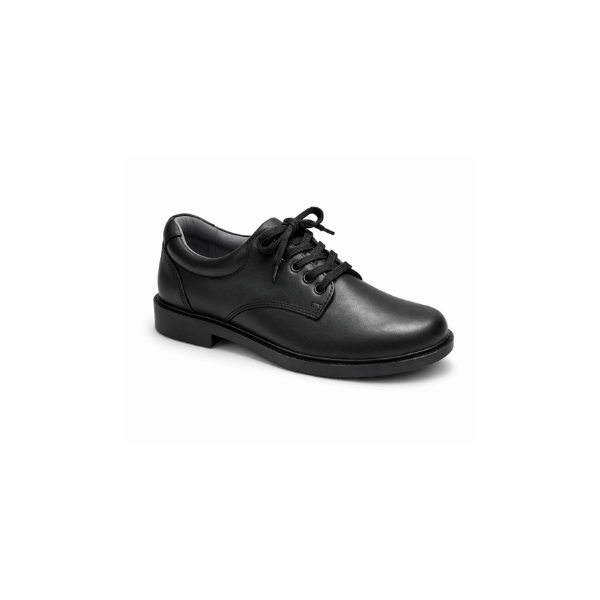
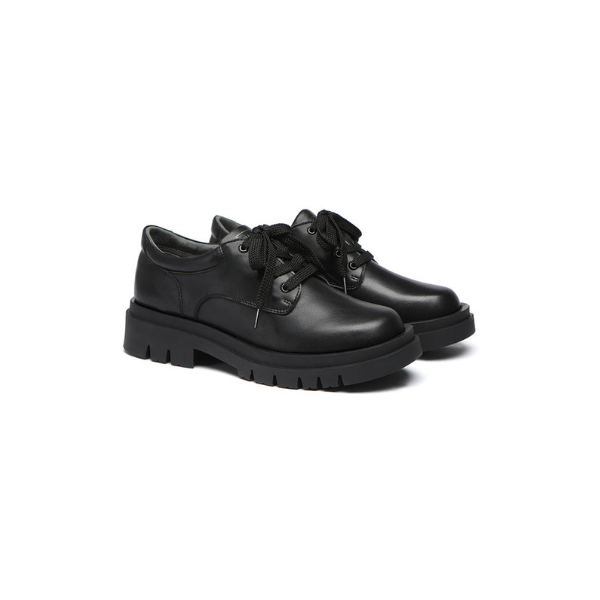
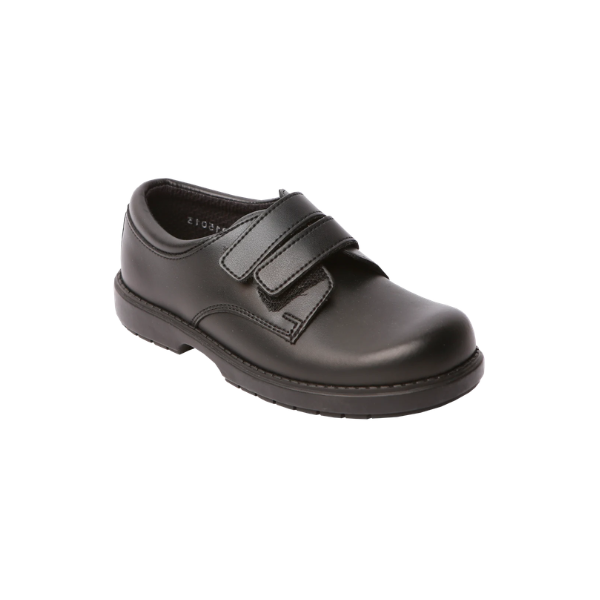
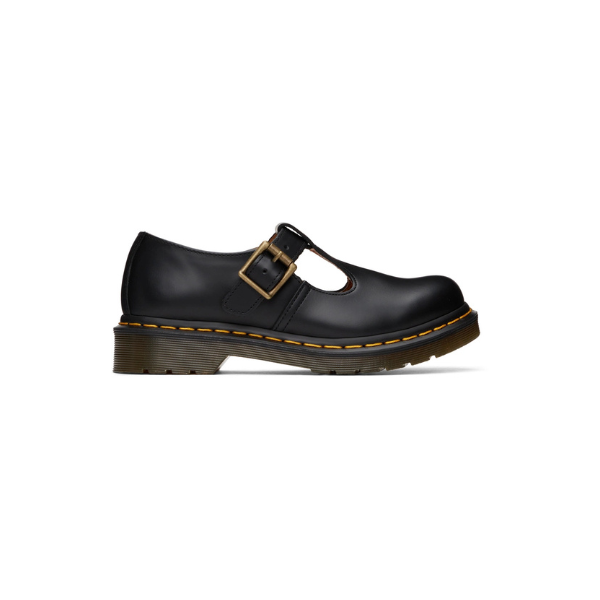
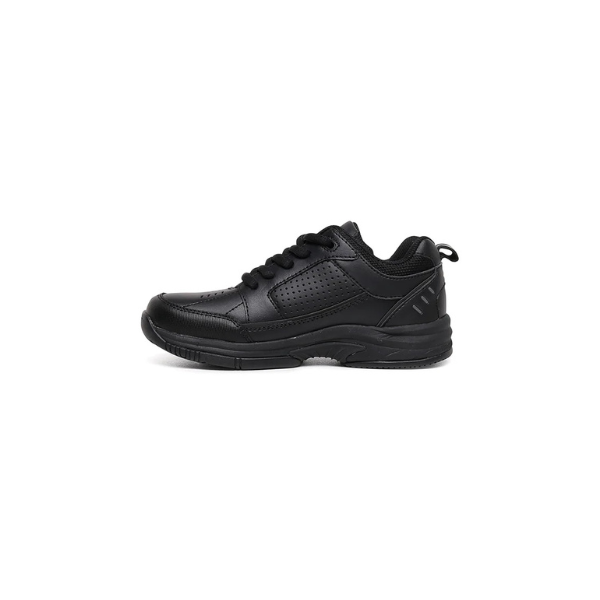
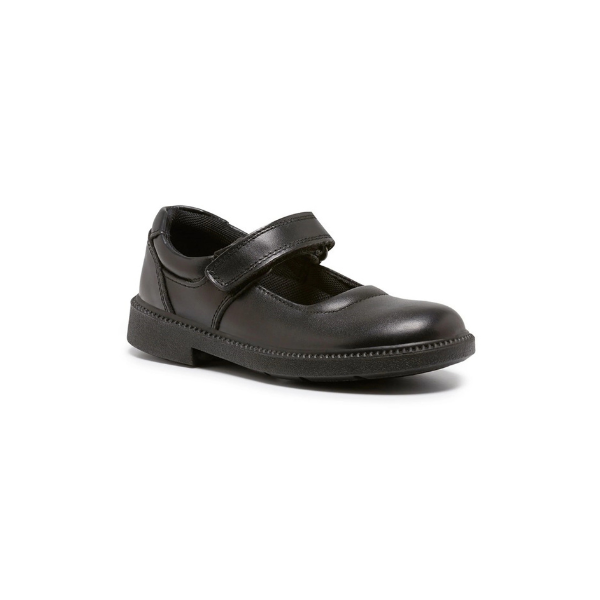
The school shoe must be sturdy, waterproof and offer full coverage of the foot. Shoes with Velcro straps are permitted for Kindergarten – Year 2 only. Below are examples of correct school shoes. If you have any questions with regard to acceptability, please check the school's uniform policy or contact the school office for further clarification.

Acceptable shoes
acceptable1.png
Acceptable
acceptable2.png
Acceptable
acceptableK-2.png
Kindergarten-Year 2 only
Unacceptable shoes
unacceptable1.png
Unacceptable
unacceptable2.png
Unacceptable
unacceptable3.png
Unacceptable
Sports shoes

Sports shoes must be a runner or cross-trainer, specifically designed for physical activity. They may be of any colour and can have up to 50 percent fluorescent colouring. Casual, flat soled or skater shoes are not acceptable.

Non-uniform days

In keeping with the school's values, clothing that is worn on mufti days and selected excursions must be modest and appropriate for the occasion. Please note that the final decisions regarding modesty and appropriateness will be left to the discretion of the supervising teacher and/or the Principal.

In general, clothes must be of modest design and fit (ie. not see-through, tight-fitting or short). Students are required to wear hats as per the hat policy.

Tops

Shirts should not have any objectionable writing or pictures. Tops and bottoms must meet or overlap. Strapless tops, spaghetti straps or off-the-shoulder tops are not allowed.

Bottoms

Shorts and jeans must be worn so that underwear is not visible. Jeans and denim shorts must not have large rips in them. Pants should not be tight-fitting. Leggings can be worn under a skirt, dress or shorts. Skirts/dresses/shorts must be of a modest design and length.

Shoes

Fully enclosed shoes must be worn. If there is any occasion where other styles of shoes are allowed, this will be noted on the excursion note.

Swimming costumes

All students must wear a rash shirt with their swimming costume, unless they are competing in a swimming race. Board shorts may be worn over costumes. When representing CCS in any school event, girls are required to wear a modest one-piece costume. Boys are able to wear swimming costumes of modest design.

Parent involvement

Association membership

All Christian parents and friends of Calderwood Christian School are encouraged to become members of the Association.

Membership in the Association allows you to vote at meetings on topics that affect you and gives you greater insight into and involvement in the running of our School.

The Nurture magazine is a publication of Christian Education National (CEN) of which Calderwood Christian School is a member. Association members are able to receive a copy at Association meetings.

For further information about membership, visit the School website.

To apply for associate membership, click here.

Parents & Friends

The Calderwood Parents & Friends (P&F) gives parents and friends of the school another avenue for involvement and service in the school.

The P&F seeks to provide:

  • opportunities for the school community to come together
  • an informal link between the parents, School Board and staff
  • services to the children and parents
  • funds for the school by means of fundraising activities.

All parents and friends are most welcome to attend these meetings. Meeting dates and other activities of the Calderwood P&F are available on the website event calendar.

Each year, every class also has a volunteer Parent Coordinator. Coordinators occasionally communicate committee activities to others, organise rosters and food for events, and organise social events for parents.

The committee can be contacted at pandf@calderwood.nsw.edu.au.

Volunteering

All parents are encouraged to participate in the daily activities of the School. Your personal involvement benefits both yourself and the school.

Parental help results in:

  • keeping school fees down by performing tasks which otherwise would require the employment of additional staff or tradespeople
  • closer contact with, and a deeper understanding of, many functions of the school
  • getting to know other parents, teachers, students and what goes on in your child's clas
  • a closer relationship between parents and their children through the child's enjoyment of their parents' involvement, and showing them that parents are interested in their activities.

Parents can be involved in helping with lessons, transport for students travelling to functions and sporting events, Interest and Expert groups, reading and various other activities throughout the year.

Your child's class teacher would be pleased to hear from parents willing to volunteer some time to assist in the class.

Parents who would like to volunteer should complete this form, which includes your WWCC number. Administration staff will contact you once this is processed so that you can volunteer. Volunteers are reminded to first report to Reception to sign in.

Extra-curricular

Chess

Students are invited to engage in our Secondary School Chess Club. Through a variety of coaching and game experiences both in and outside of school, students can hone their skills of problem solving and strategic thinking.

CRU

Calderwood seeks to support all students in their journey of faith and spirituality. CRU is a voluntary lunchtime Christian fellowship group. It aims to provide a space where students can learn more about faith, while supporting and encouraging each other in a friendly atmosphere.

Music

Calderwood offers a range of music opportunities for secondary students to develop their skills, perform with others, and grow in confidence.

  • Calderwood Voices (Years 7-12) – A secondary vocal ensemble for students wishing to further develop their singing and performance skills. Open to all ability levels.
  • Concert Band (Years 5-8) – An ensemble for beginner orchestral instrumentalists to develop their musicianship and ensemble performance skills.
  • Rock Band (Years 7-9) – A contemporary ensemble featuring guitar, bass, drums, keyboard and vocals, open to students of all experience levels.
  • Stage Band (Years 7-12) – A performance ensemble specialising in jazz, funk, blues and Latin styles for students seeking an additional challenge.

Students interested in joining a choir, band or ensemble should speak with their music teacher for further information.

Private Instrumental and Vocal Tuition (Years 1-12)

Lessons are available in voice, piano, guitar, bass, drums, and selected brass and woodwind instruments. Families are connected with local tutors who meet with students during school hours to provide private lessons. This program is available at an additional cost.

To express your interest in enrolling your child please complete the Music Tuition Sign-Up Form.

Dance

Dance Development Club

An open lunchtime group for students who enjoy dance and want to explore a variety of styles, including hip hop, jazz, lyrical and contemporary. Students develop technique, confidence, creativity, and their own unique style in a fun and supportive environment.

Dance Crew

A selective, student-led ensemble limited to seven students. Rehearsing weekly at lunchtime, members collaborate to select music and prepare high-quality performances for assemblies and special events. With a strong hip hop focus, students develop their performance skills while using dance to bring glory to God. This is an auditioned ensemble.

Students interested in joining an ensemble should speak with their music teacher for further information.

Debating

Debating Club offers students the opportunity to engage in workshops, activities and debates to expand their oratory skills as a team.

Duke of Edinburgh Award Scheme

The Duke of Edinburgh Award Scheme is an incredible opportunity for Calderwood Christian School students to embark on a life-changing adventure. This program empowers young individuals to develop essential life skills, boost their confidence, and make lasting memories. Through a mix of outdoor activities, community service, and personal development, students can challenge themselves, discover their potential, and stand out on higher education and job applications. Joining the Duke of Edinburgh Award is not just an achievement; it's a journey that will help shape students into well-rounded, resilient and confident individuals.

Outdoor education

We value learning in the outdoor environment. All students in Years 7-12 will be involved in a sequential camp experience that gives them life experiences that they can draw from in their immediate and future life. Each camp has set aims and themes depending on the year group.

Representative Sport

Zone and State

Students may be selected for the CSSA (Christian Schools Sports Association) Zone and State (in the case of cross-country) carnivals.

If successful at the Zone carnivals, students may then be selected to compete at the CSSA State carnival in swimming and athletics. If successful at the State CSSA carnivals, students may be selected to compete at the CIS (Combined Independent Schools) carnival. At the level of CIS, parents are responsible for costs involved and transportation of students.

Friendlies

During the year, students will have the opportunity to trial for CCS sporting teams to represent the school in various gala days. Some of the sports include volleyball, touch football, netball, football (soccer), basketball, triathlon, tennis and cricket.

Transport

Bus travel

Information below about school Opal cards, bus routes and bus codes of conduct.

Opal Cards

Kindergarten to Year 2 students are eligible for a school bus Opal card irrespective of the distance from home to school.

Primary students who live outside a 1.6km radius, or who reside more than 2.3km walking distance, by the shortest possible route, are eligible for an Opal card.

All other students must live outside a 2km radius from the school to apply for an Opal card.

Students who travel to and from school by bus must carry a valid Opal card with them whenever they are on the bus. If a student does not have a card, they must pay for each trip made. It is advisable that students carry a small amount of money in case they do not have their card on any given day. School Opal cards cannot be used for any other journey other than the journey stated on the application form. Any alteration to the trip that the card has been issued for must be paid for.

In the event that your child's Opal card is lost or destroyed, to apply for an Opal card, or for change of address details, visit TransportNSW.


Bus routes

Premier Illawarra bus service provides transport to and from Dapto, Haywards Bay, Albion Park and Albion Park Rail areas, and also from Kiama, Shell Cove, Shellharbour, Warilla, Mt Warrigal, Flinders and Oak Flats.

Kiama Coachlines provide bus transport to and from Jamberoo and Kiama.

Bus times and routes are available from the respective bus companies or from the TransportNSW Trip Planner.

Bus Code of Conduct

Students are expected to be well behaved at all times and particularly so when travelling on public transport.

The following Code of Conduct has been set down by the Department of Transport and breaches of the Code may result in the withdrawal of the Opal card. To ensure their safety and the comfort of other passengers, students will:

  • behave safely at all times
  • respect the needs and comfort of other passengers
  • Junior School students to sit at the front of the bus
  • behave appropriately at all times (eg. no use of offensive language, fighting, spitting, placing feet on seats or throwing things in or from the bus)
  • protect bus property and report any vandalism
  • show their Opal cards or tickets to the driver on boarding and when requested
  • only use the Opal card for its intended purpose
  • maintain possession of the Opal card at all times
  • follow the driver's instructions about safety on the bus (eg. instructions on where to sit)
  • adhere to the law that bans smoking on buses
  • only eat or drink (other than water) on the bus with the written permission of the bus operator
  • keep arms, legs and other parts of their bodies inside the bus
  • only attract the attention of the driver in the case of emergency
  • remain seated at all times unless space does not allow for this

According to the Code of Conduct, unacceptable, dangerous or highly dangerous behaviour may lead to the loss of travel privileges for a set period of time, or the student may be banned from travelling on the buses.

Car parking at school

In the interests of the safety of our children, parents are requested to use the allocated car park and to adhere to the speed limit (10km/hr) and the following directions:

  • Enter the property via Gate 1 and follow the roadway in a one-way direction to exit via Gate 2.
  • Park only within marked spaces from entry at Gate 1. Please refrain from parking on grassed areas or adjacent to the COLA by Gate 2.
  • All parking is rear to kerb along the western boundary fence.
  • Kiss and Go 2 located near the school hall for K-12 students. Afternoon pick-up from 3.20pm.
  • Do not park in the Kiss and Go zones.
  • Do not drop off or pick up children at the entry or exit to the car park, or on the pedestrian crossing which crosses the driveway exit.
  • Parking is not permitted in the area opposite Kiss and Go 2.
  • Parents of Junior School children are to accompany their children across the car park.
  • Please use your laminated surname sign on your passenger sun visor to assist staff at afternoon pick-up. Please contact Reception if you require a sign.

Drop off and pick up instructions

Please click through for information about dry weather and wet weather pick ups and drop offs.

Dry weather drop off
  • Students are to be dropped off no earlier than 8:10am.
  • Kiss and Go 2 is in operation to drop off students
Dry weather pick up
  • At the end of the day, students walk to either the Kiss and Go Zone or the school bus waiting area located at the hall. A teacher is on duty until 3.45pm.
  • Any child not collected by 3.45pm is taken to Student Services where they are supervised by the teacher on duty.
  • Parents and carers will be called and requested to collect their child prior to 4pm.
Wet weather drop off
  • All students are to be dropped at Kiss and Go 2, no earlier than 8:10am.
  • The teacher on duty will be in the Hall - students will be redirected by Coordinators to safely move to their classrooms if weather becomes problematic.
  • Please do not use the Giraffe Skin as this area is not supervised.
Wet weather pick up
  • K-6 (with no older siblings) can be collected from outside Reception from 3:20pm.
  • If you arrive prior to 3:20pm, please park in the car park so as not to impede access for deliveries and emergencies.
  • K-6 (with older siblings) join their siblings in the Hall at 3:20pm. Students will be supervised in the Hall until your arrival is announced.

Student drivers

Senior students may choose to drive to school if they have their licence.

Parking on site is a privilege afforded to Calderwood students due to our large grounds and small student population. All drivers are to adhere to the signed speed limits, and park in designated parking for student drivers. Failure to adhere to the expectations of the school whilst on the school grounds will result in the student no longer being able to park at school. The next closest available parking is on Escarpment Drive.

Whilst on the road between school and home, students are expected to comply with all road rules.

On occasion students request permission to travel in a vehicle with an older sibling or a friend. As a school, we strongly discourage students from getting into another driver's vehicle unless they have sought express permission from their parents and the parents of the driver.

Whilst we take every opportunity to reiterate this position to students, it is unreasonable for us to supervise or control which students are going home with whom. We ask for your support in reminding student drivers of their responsibilities to ensure any passengers have sought permission from their parents prior to getting into the vehicle with them.

Walking or riding to and from school

Students may walk or ride their bike or scooter to school using the footpath from Calderwood Valley estate to Calderwood Rd. Students must use the designated school crossing manned by a School Crossing Supervisor to cross Calderwood Rd. Students must not walk or ride along the road, roadside or grassed area of Calderwood Rd.